
I. Introduction: The Bridge Between Boredom and Business
For any small business in the competitive local market, understanding how to use social media to drive website traffic in South Africa is the single most powerful strategy for scaling up without exhausting your budget. Picture this: A potential customer in Durban is scrolling through Instagram during their lunch break. They’re looking for a quick distraction. Your business, whether you’re a bespoke furniture maker in Stellenbosch or a brilliant digital firm like Z Web&Co, needs to jump out of that distraction and guide them directly to your website. But how do you get them to drop the doom-scroll and click your link?
The answer lies in mastering the art of the ‘Social-to-Site’ funnel. This is not about getting more likes. This 1500+ word guide is a deep dive into actionable, high-conversion strategies that transform fleeting social media attention into long-term, valuable traffic for your website. By the end, you will know exactly how to use social media to drive website traffic in South Africa and conquer local search.
II. What is the Social-to-Site Funnel and How Does It Work?
The most common mistake businesses make is treating social media as a destination rather than a bridge. They focus entirely on vanity metrics like follower count, forgetting that the real gold is on their website—where transactions happen. Therefore, shifting your mindset to a funnel approach is critical.
A. How does social media contribute to SEO?
Social media does not directly influence your Google keyword rankings, but it is an incredibly powerful indirect ranking signal. When your social content goes viral, it drives huge bursts of traffic to your site. This influx of visitors who stay on your pages (high dwell time) and don’t immediately bounce back to Google sends strong signals to the algorithm that your website is authoritative and relevant.
- Increased Visibility: Social posts expose your content (and brand name) to people who might not have found you through search yet.
- Backlink Acquisition: High-quality, shareable content can organically earn backlinks when other sites reference your post. Backlinks remain one of the most vital SEO ranking factors.
- Brand Authority: Consistent, high-value social content establishes your brand as a market leader, which Google rewards with higher rankings over time.

III. PAA Question 1: Which platforms are best to drive traffic for local South African businesses?
Choosing the right platform is more important than being on every platform. In South Africa, certain channels have a higher penetration and better conversion rates for local services.
A. The Power of Instagram and TikTok for Local Traffic
For engaging visual businesses (restaurants, boutiques, services), Instagram and TikTok are essential. However, they both limit external links, creating the well-known “link-in-bio” challenge.
- The Single Link Solution: You must use a link aggregator (like Linktree or an optimized website page) that contains a single, constantly updated “Most Recent Blog Post” link, and a link to your key services (e.g., your Z Web&Co contact page).
- Content Strategy: Create short, entertaining videos (reels/TikToks) that summarize a key takeaway from your latest blog post, ending with a clear, verbal Call-to-Action (CTA): “Full guide in the bio!”
B. Facebook and LinkedIn: The Direct Drivers
Facebook remains the most powerful platform for direct link sharing and paid advertising in South Africa.
- Direct Link Sharing: Unlike the visual platforms, Facebook allows you to share a full, clickable link directly in the body of a post, generating an image preview. This is a crucial factor when figuring out how to use social media to drive website traffic in South Africa.
- Targeted Ads: You can geo-target users down to a specific suburb in Johannesburg or Cape Town who have specific interests—a highly effective method for local SEO.
IV. PAA Question 2: How can I create social media content that actually leads to a click?
The content you post must not satisfy the user’s curiosity entirely. It must serve as a compelling teaser for a deeper dive on your website. Consequently, the goal is to create a gap between the curiosity you spark on social media and the full answer that lives on your site.
A. The Power of the Hook and the Half-Answer
In every piece of social content, use a powerful hook (the first 3 seconds of a video or the first sentence of a post) that addresses a pain point. Then, provide only half the solution.
- Example Hook: “Are you a small business owner in Pretoria struggling with load-shedding? We found the 3 best backup battery systems, but only ONE has a 10-year warranty.”
- The Half-Answer: You share details on system #1 and #2.
- The Click: “For the guaranteed 10-year warranty system (#3), see the link in our bio!”
This technique transforms a casual scroll into a focused click, directly answering how to use social media to drive website traffic in South Africa.
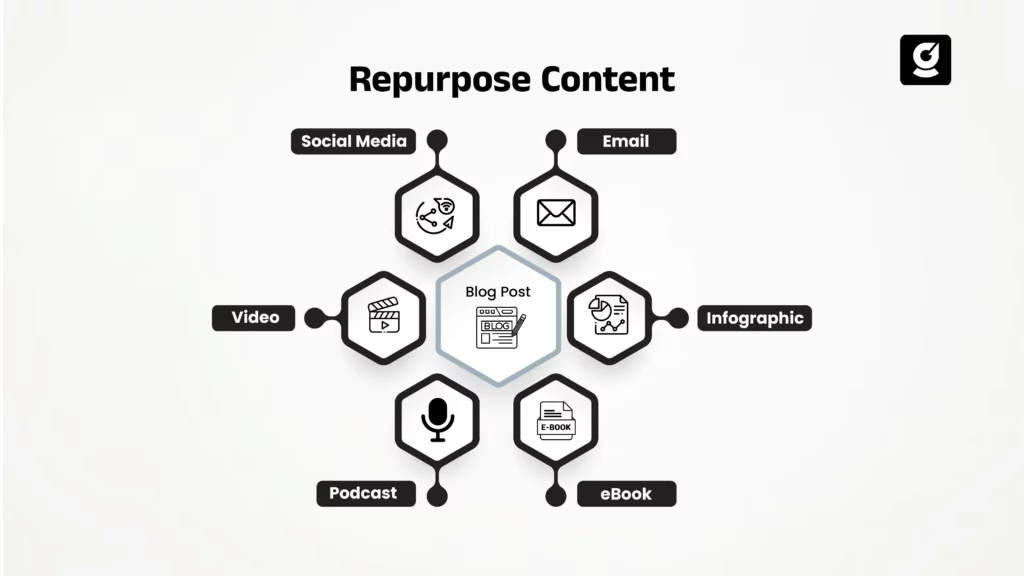
B. Repurposing Content: The SEO-Social Feedback Loop
Stop creating content from scratch for every platform. Create one massive, 1500-word blog post (like this one!), and then carve it into dozens of social snippets.
| Original Content (Website) | Social Repurpose (Traffic Driver) |
| Full Blog Post (1500 words) | Facebook: Post with link to the full article. |
| The “PAA Questions” (H2/H3s) | Twitter/X: Series of 5 threads, one for each question, linking back to the post. |
| Infographics/Charts | Pinterest: Pin the infographic with a direct link. |
| Conclusion/Summary | Instagram Reel: 60-second video summary with “Link in Bio” CTA. |
V. PAA Question 3: How do I ensure my social traffic helps my local SEO ranking in South Africa?
Driving generic traffic from abroad won’t help your local rankings in South Africa. You need to focus on geo-signaling—using both your content and your social media targeting to convince Google that you are a relevant local authority.
A. Geo-Tagging Everything (Content and Social)
To truly nail how to use social media to drive website traffic in South Africa, you must weave local keywords and geo-tags into your content constantly.
- In Blog Content: Use specific city names, suburbs, landmarks, and relevant local phrases (e.g., “load shedding solutions in Gauteng”).
- In Social Posts: Always use location tags on Instagram, Facebook, and TikTok for the region you are targeting. This feeds geo-specific data to both the social platform and search engines.
- Use Afrikaans and Zulu Terms: Where appropriate for your audience, incorporate common phrases or hashtags to tap into specific, underserved local segments.
B. The “Tag and Mention” Strategy
Actively tag local businesses and community organizations in your social posts (e.g., “We loved partnering with [Local Charity Name] in Cape Town! Read the full story on our latest blog.”).
- This dramatically increases the chance of a re-share, widening your reach to a relevant, local audience.
- The re-share drives new local users to your website, strengthening your local relevance signal to Google.


VI. PAA Question 4: Should I use paid ads on social media to drive website traffic?
Yes, you absolutely should, especially for new content and for targeting high-intent local users. Paid social media ads (like Facebook Ads) are one of the fastest and most efficient answers to how to use social media to drive website traffic in South Africa.
A. Boosting New Content
When you publish a new blog post, don’t wait for organic traffic. Allocate a small budget (even R500) to create a “traffic” campaign on Facebook/Instagram that directly links to the new article.
- Benefit: This creates an immediate surge of traffic, which can jump-start your new post’s ranking. Google sees the instant positive user signal and may accelerate its inclusion in the SERPs.
- Hyper-Targeting: You can target the exact audience demographic who are most likely to convert, maximizing the quality of the traffic being sent to your site.
B. Retargeting (The Low-Hanging Fruit)
The most profitable use of paid social is retargeting. This means showing ads to people who have already visited your website.
- They are already familiar with your brand.
- You can remind them to finish reading a blog post or complete a purchase.
- The conversion rate for retargeting is drastically higher than for cold traffic.
VII. The Key Metrics: Moving Beyond Vanity
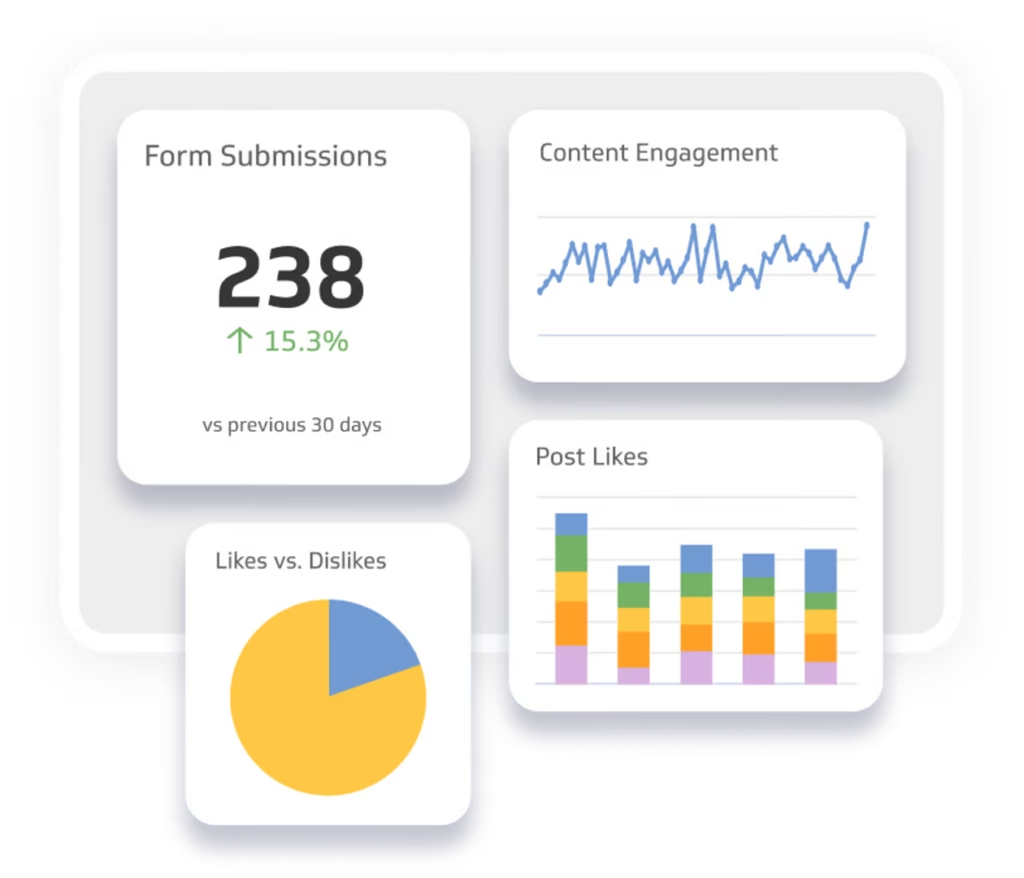
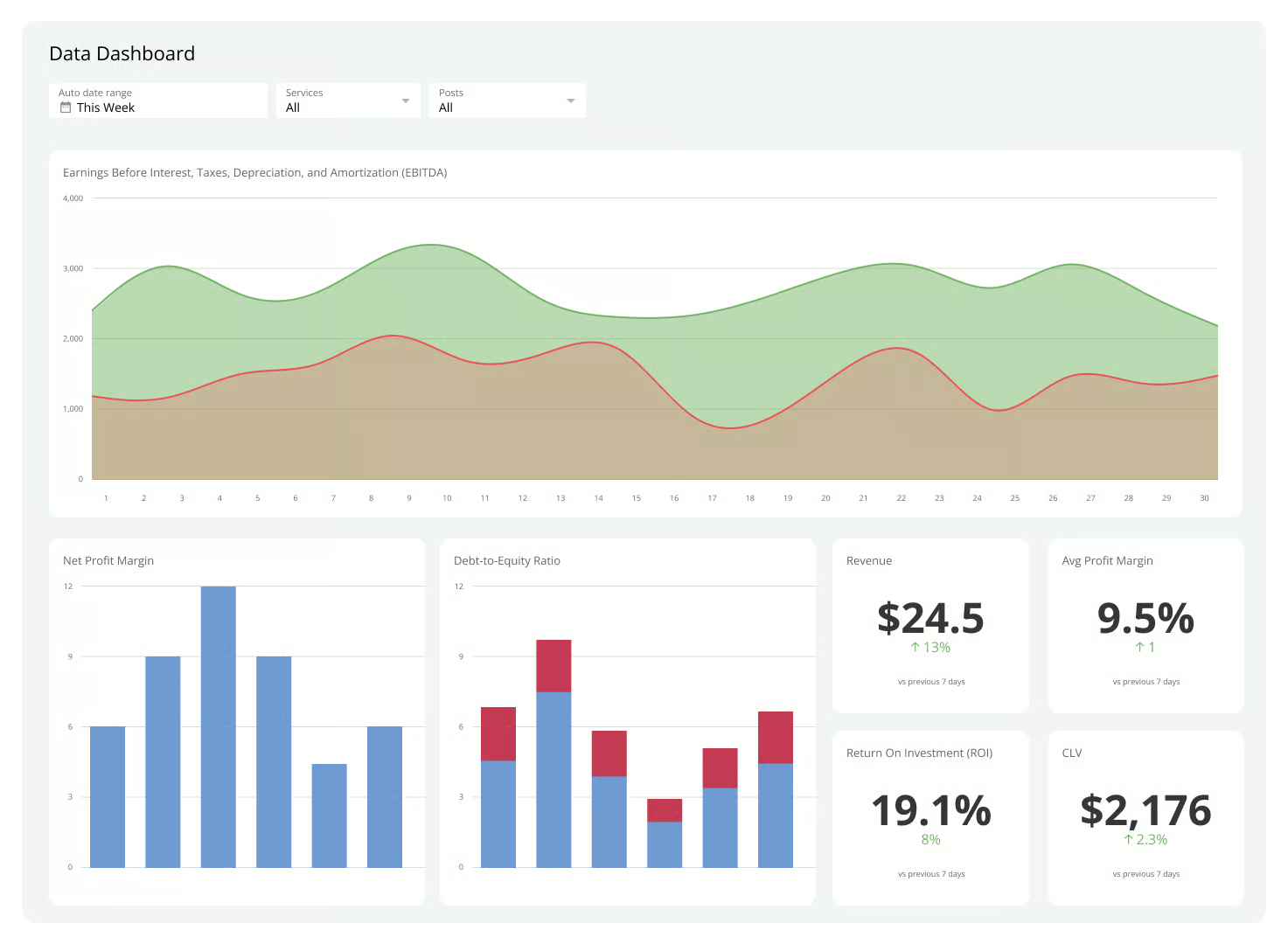
If your primary goal is to answer how to use social media to drive website traffic in South Africa, you must track the correct metrics. Forget the number of likes—focus on the following:
- Click-Through Rate (CTR): The percentage of people who saw your social post and clicked the link. A high CTR proves your “hook and half-answer” strategy is working.
- Bounce Rate (on your website): The percentage of visitors who leave your site after viewing only one page. If your social content is perfectly aligned with your blog post content, your bounce rate will be low, sending a great signal to Google.
- Time on Page (Dwell Time): How long users stay reading your article. Longer dwell time = better SEO ranking. If you write an engaging, 1500-word post like this, you want to see an average time of 3+ minutes.
VIII. Conclusion: The Conversion is the Click
Mastering how to use social media to drive website traffic in South Africa is about intentionality. For a comprehensive strategy that ties social media success directly to your revenue goals, explore our full range of professional Digital Marketing Services. Z Web&Co are experts in integrating social media marketing with advanced local SEO strategies.
Z Web&Co are experts in integrating social media marketing with advanced local SEO strategies. We ensure your content is not just popular, but profitable.
Ready to turn your social scrolls into sales?
Contact Z Web&Co today.
- Call Us: 061 504 7939 (Also our WhatsApp number)
- Email Us: zwebandco@gmail.com
- Visit Our Website to get your marketing strategy today: www.zwebandco.com
Leave a Reply