
E-commerce Shipping and Logistics is the silent killer of online businesses. You’ve nailed the website, perfected the product, and charmed the customer, but if that package arrives late, damaged, or costs an arm and a leg to ship, the whole operation falls apart. Consequently, mastering your delivery network in South Africa—a land of vast distances and unique logistical hurdles—is non-negotiable for success. The challenge of moving products from Cape Town to a remote dorp in Limpopo requires strategy, not guesswork.
Therefore, this 2000+ word guide is your definitive, engaging, and comprehensive manual on e-commerce shipping and logistics. We’ll turn this often-dreaded expense center into a competitive advantage that builds customer trust and boosts your bottom line.
Phase 1: The Strategy – Building Your Foundation for E-commerce Shipping and Logistics 📦
Your shipping strategy begins long before a customer clicks ‘Buy.’ It’s an integral part of your product cost and marketing.
1.1 From Product to Parcel: Costing is Key in E-commerce Shipping and Logistics
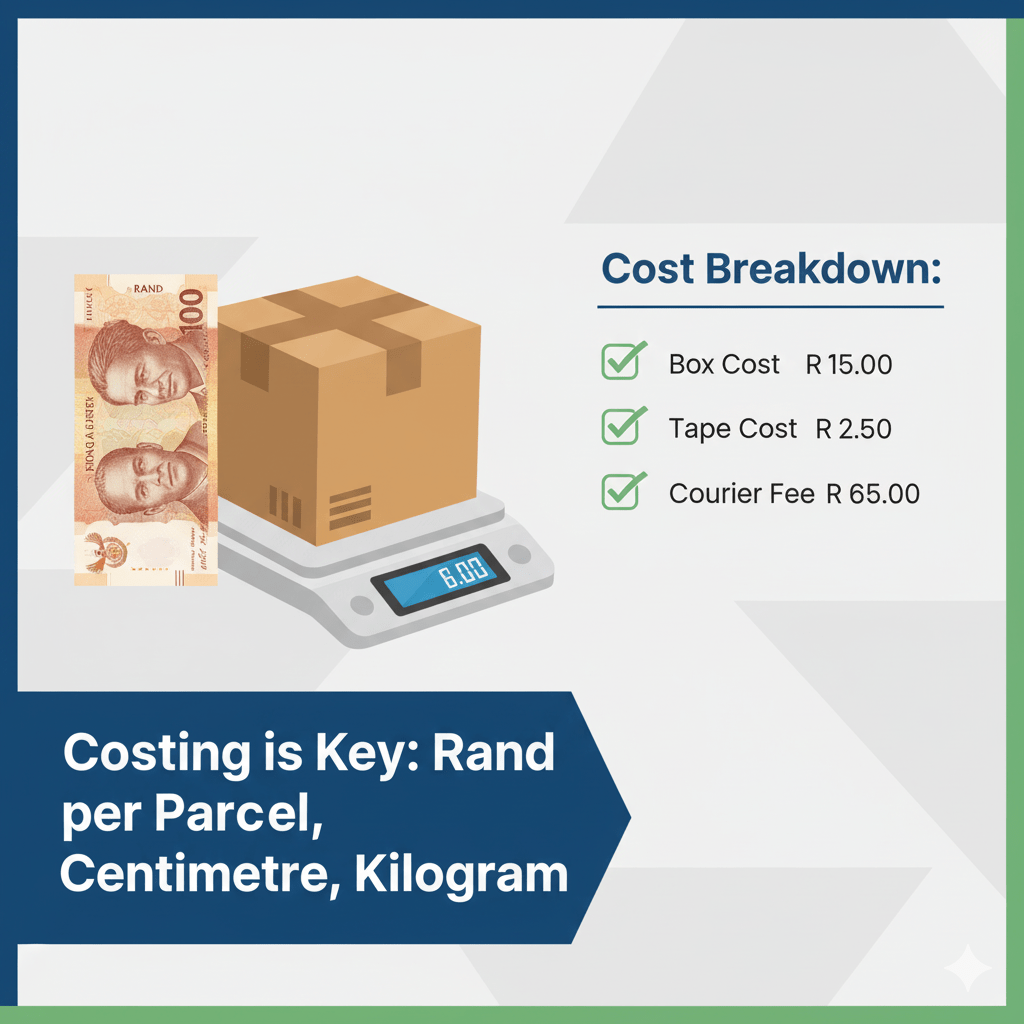
The first rule of successful e-commerce shipping and logistics is knowing your true costs. The price your courier gives you is just the start.
Crucial Cost Components:
- The Courier Rate: The base fee charged by your logistics partner.
- Packaging Costs: Boxes, void fill, tape, labels—these costs accumulate quickly. For example, a quality corrugated box might cost R8.50, and bubble wrap another R2.00 per order. Over 1,000 orders, that’s R10,500.
- Labour: The time (and therefore money) spent picking, packing, and generating waybills.
- Insurance: Protecting high-value goods against damage or loss during transit across large South African distances.
- Reverse Logistics: The cost of handling returns and exchanges (a necessary evil that must be budgeted for).
Consequently, never guess. Every few grams and every centimetre adds up. A small package might weigh 500 grams and measure 20 x 15 x 10 centimetres. Documenting these specific figures allows for accurate rate calculations and competitive pricing.
1.2 Defining Your Shipping Offer: Balancing Free vs. Fast for E-commerce Shipping and Logistics
The biggest cause of abandoned carts is unexpected shipping costs. Your offer must be simple, transparent, and aligned with market expectations.
Common Pricing Models in South Africa:
- Flat Rate: Simple, easy for customers, but challenging for you if your products vary greatly in size (e.g., R99 delivery nationally).
- Tiered Rate: Based on cart value or weight (e.g., R60 for under 2 kg, R120 for 2-5 kg).
- Free Shipping Threshold: The most powerful tool. For instance, offering free shipping for orders over R500 encourages customers to add an extra item to qualify, boosting your Average Order Value (AOV).
- Local Pickup/Click & Collect: Offering collection points in major metropolitan areas (Joburg, Cape Town, Durban) can save on costs and offer convenience.
Therefore, your pricing structure is a marketing tool. Use it to incentivize higher spending rather than just recovering costs.
Phase 2: The Partners – Choosing Your Courier Network for E-commerce Shipping and Logistics 🤝
Your courier is not just a supplier; they are the physical representative of your brand. Choose wisely, especially given the diverse landscape of South Africa.
2.1 Major Players and Local Heroes in E-commerce Shipping and Logistics
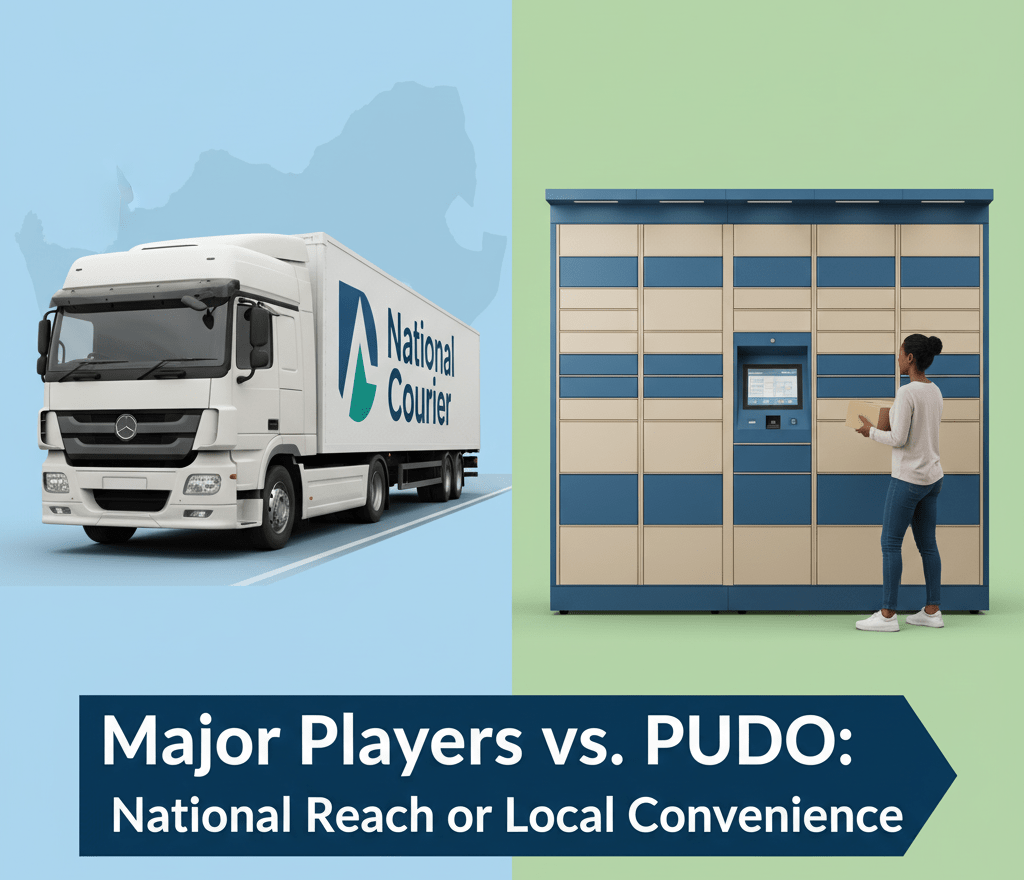
South Africa’s courier ecosystem includes national giants and specialist local providers. Your choice depends entirely on your volume, your product’s size, and your delivery area.
- The National Giants: Companies like The Courier Guy, Aramex (often via Pick Up Points), and Dawn Wing offer extensive reach and established tracking systems. They are great for high volume and cross-provincial deliveries (e.g., from Western Cape to Limpopo).
- The Last-Mile Specialists: Services that excel in rapid delivery within city limits (e.g., door-to-door in Sandton or Greenpoint). They are often faster but may be pricier or have a smaller reach.
- Pudo Lockers / Pick-Up Points: Extremely popular for budget-conscious customers and lower-value items. Using a network of lockers (like Pudo or Parcelninja’s network) offers flexibility and reduces failed delivery attempts.
Furthermore, consider integration. Does the courier offer a simple API or plugin that connects directly with your e-commerce platform (Shopify, WooCommerce, etc.) to automate waybill generation? Manual waybills slow down your entire operation.
2.2 Navigating the Remote Roads: Delivery to South Africa’s Dorps for E-commerce Shipping and Logistics
This is where many businesses fail. Delivery to main centres (within a 50 km radius of Joburg, Cape Town, Durban, etc.) is easy. Deliveries to regional or remote areas (dorps and farms) require specialist attention and usually incur higher costs (Out-of-Area Surcharges).
Key Strategies for Remote Delivery:
- Transparency: Clearly state at checkout that delivery to regional areas may take an extra 2-3 days and cost an additional R50 to R150.
- The Post Office Alternative (Caution): While historically vast, the South African Post Office (SAPO) has been unreliable. Only consider this for non-urgent, very low-value items, and ensure clear communication with your customer.
- Consolidation: Work with your courier to aggregate regional deliveries into a less frequent, but more economical, service.
Therefore, never promise a 24-hour turnaround to a remote town unless you’ve budgeted for the express service fee. Manage customer expectations by being honest about the geography of South Africa.
Phase 3: The Process – Optimizing Your Warehouse Flow for E-commerce Shipping and Logistics ⚙️
Speed and accuracy are determined not by the courier, but by your internal processes. This phase is about optimizing the Pick, Pack, and Ship sequence.
3.1 The Magic of Pick and Pack Efficiency in E-commerce Shipping and Logistics
A disorganized warehouse is a profit killer. Whether you are working from a small garage or a 500 square metre facility, efficiency rules.
Best Practice Tips:
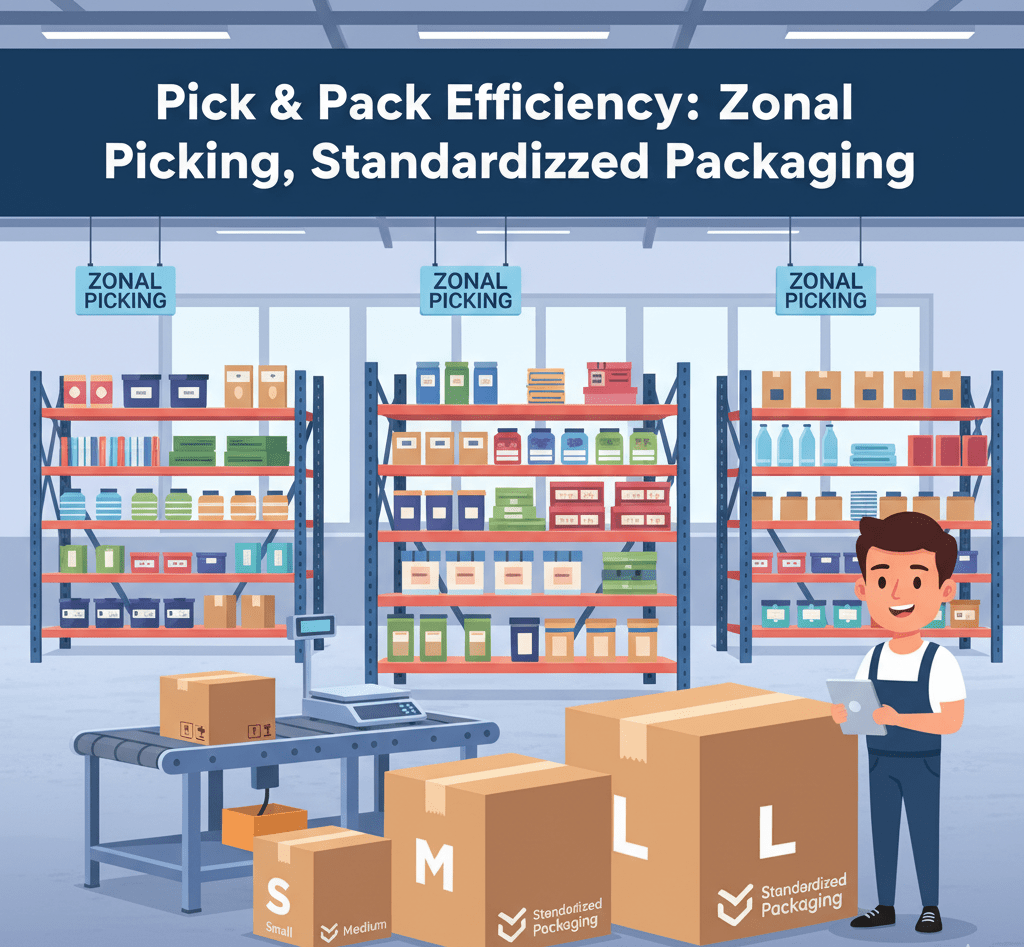
- Zonal Picking: Group your products into zones (e.g., heavy items, fragile items, fast-moving items) to minimize walking time.
- Standardized Packaging: Have 3-5 standard box sizes. This reduces decision time, saves packaging costs, and speeds up the packing process. For instance, using just three sizes: Small (10 x 10 x 10 cm), Medium (30 x 20 x 10 cm), and Large (50 x 40 x 30 cm) can cover 90% of your orders.
- Batch Processing: Don’t process orders one-by-one. Print all waybills for the day in one batch, then all picking slips in another batch, and pack them sequentially.
Consequently, moving from an order-by-order approach to a batch-and-zone approach can cut your internal labour time by up to 40%, directly improving the speed of your entire e-commerce shipping and logistics operation.
3.2 The Digital Backbone: Automation for E-commerce Shipping and Logistics
Manual data entry is prone to errors (typos in street names, incorrect phone numbers) which lead to failed deliveries and high courier surcharges. Automation is your solution.
- Integrate: Use your e-commerce platform’s (Shopify, WooCommerce, etc.) built-in tools or third-party apps to connect your store directly to your courier. This automatically pulls the customer’s delivery address and prints the waybill instantly.
- Notifications: Automation ensures that the customer receives real-time tracking updates without you lifting a finger. A notification system that says, “Your package has left our Midrand facility,” builds trust.
- Address Validation: Automated systems often cross-check the entered address against postal codes, flagging obvious errors before the waybill is printed.
Furthermore, implementing this digital backbone ensures that your human effort is focused on careful packing, not repetitive data entry.
Phase 4: The Customer Experience – Turning E-commerce Shipping and Logistics into a Competitive Edge ⭐
Shipping is usually a pain point; the successful brands turn it into a high point.
4.1 Communication is King: Mastering Tracking and Transparency for E-commerce Shipping and Logistics
The biggest anxiety for a customer is not knowing where their parcel is. Every courier offers tracking, but how you communicate that tracking is what matters.
Strategies for Transparency:
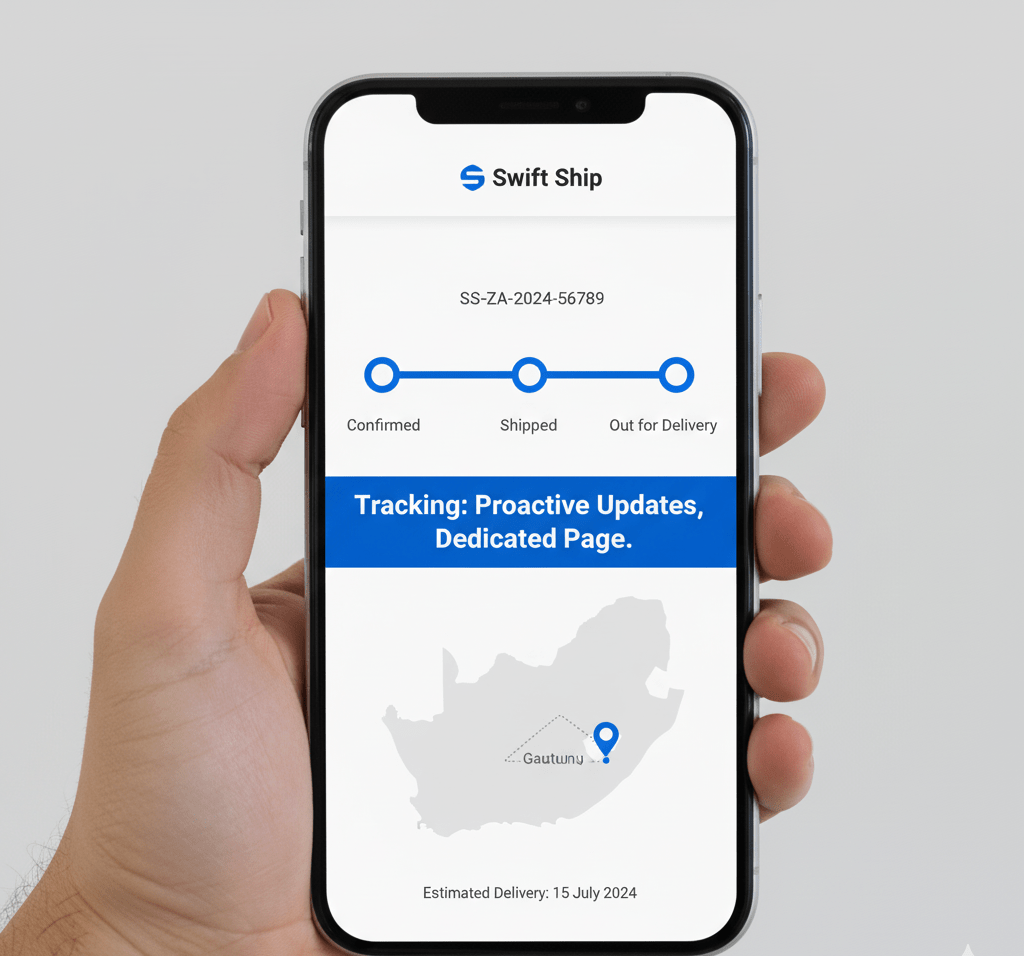
- Proactive Updates: Send SMS or WhatsApp updates at every stage (Order Confirmed, Dispatched, Out for Delivery, Delivered). This is far more engaging than a generic email.
- Dedicated Tracking Page: Direct customers to a dedicated tracking page on your website (branded with your Z Web&Co logo), not just the courier’s often confusing external site.
- Delivery Slots: Where possible, especially in metro areas, offer customers a choice of delivery time slots (e.g., 9:00–12:00 or 14:00–17:00). This drastically reduces failed deliveries.
Therefore, excellent tracking communication minimizes customer support queries and transforms a mandatory step into a moment of brand reassurance.
4.2 The Unboxing Experience: The Final Touch in E-commerce Shipping and Logistics
The delivery box is your last, best chance to impress the customer. Don’t waste it on boring brown cardboard.
- Branded Elements: Use a custom-printed box or, at least, branded tape. Include a thank you note (hand-signed if possible) and a small, relevant free sample or sweet (a little bit of local flavour).
- Presentation: Ensure the product is nested securely. Use eco-friendly void fill (shredded paper, compostable peanuts) rather than just bubble wrap.
- Returns Slip Included: Include a pre-printed returns waybill and simple instructions in the box. This sounds counterintuitive, but it dramatically lowers perceived risk and increases purchase confidence.
Furthermore, a memorable unboxing experience creates user-generated content (UG C)—pictures and videos shared on social media—which is free marketing gold.
Phase 5: Legalities, Units & Future Proofing – Staying Compliant with E-commerce Shipping and Logistics ⚖️
Handling cross-border trade and compliance within South Africa requires diligence.
5.1 Legal and Compliance Check: The Rules of E-commerce Shipping and Logistics
Compliance is critical, particularly for cross-border e-commerce or products with specific regulations.
- Invoices & Duties: If you import products, ensure your invoices correctly list the Rand value, harmonized system (HS) codes, and are compliant with SARS import duties.
- POPIA: Your courier partner handles customer data (names, addresses, phone numbers). Ensure their privacy policy (and yours) is compliant with South Africa’s Protection of Personal Information Act (POPIA).
- Clear Terms & Conditions: Your website must clearly state your average delivery times (e.g., 2-4 working days for major centres) and your refund/returns policy.
Therefore, transparency here protects your business from legal disputes and customer frustration.
![A graphic showing a checkmark next to "SARS Compliance" and the POPIA logo, emphasizing legal requirements. Text contains: "Compliance: SARS Duties, POPIA Data."] Alt Tag: Graphic showing compliance icons for SARS import duties and POPIA data protection, essential legal aspects of E-commerce Shipping and Logistics.](https://zwebandco.com/wp-content/uploads/2025/10/Gemini_Generated_Image_narwh8narwh8narw.png)
5.2 Unit Consistency: Metric System Rule for E-commerce Shipping and Logistics
Since we are operating outside the imperial system (as per your mandate), every measurement must be metric, which is the standard across South Africa’s courier industry.
Always use:
- Kilograms (kg) and Grams (g): For weight.
- Centimetres (cm) and Metres (m): For dimensions (length, width, height).
- Litres (L) and Millilitres (mL): For liquid volumes.
Consequently, all packaging should be measured in kilograms and centimetres when negotiating rates and creating waybills. For example, a heavy item might be packaged in a 40 x 40 x 40 cm box, weighing 15 kg.
Essential Tutorial: Mastering E-commerce Logistics
To further deepen your understanding of optimizing your supply chain and delivery process, watch this comprehensive tutorial:
The Z Web&Co Advantage: Flawless Logistics, Happy Customers 🌐
Mastering e-commerce shipping and logistics is challenging, especially when you are also running marketing, product development, and customer service. To ensure your entire logistics engine is built for speed and reliability from the ground up, begin your expert ecommerce store Durban project today. At Z Web&Co, we streamline this chaos.
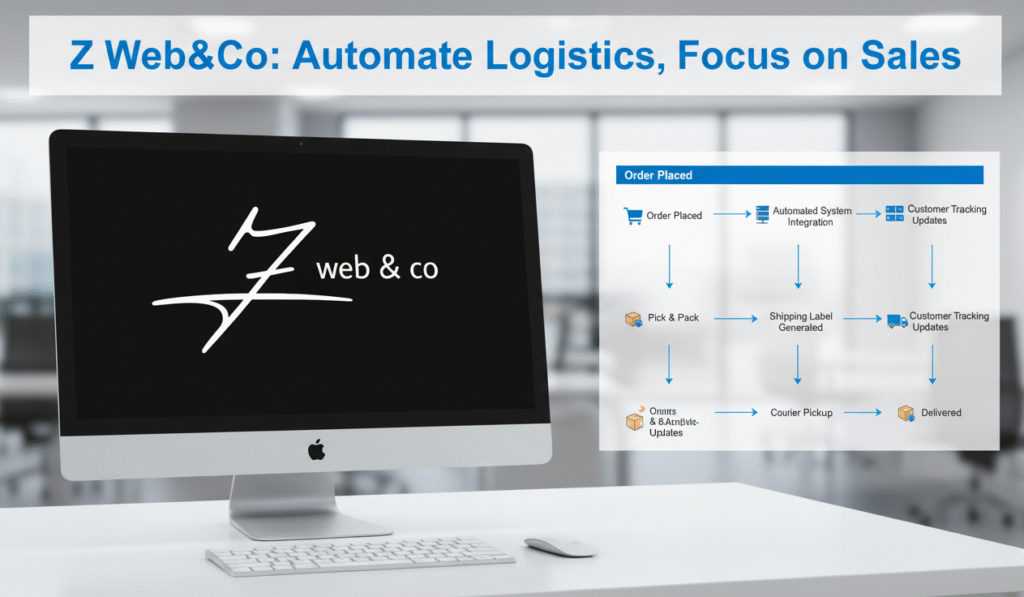
At Z Web&Co, we streamline this chaos. We integrate your e-commerce platform with South Africa’s leading courier services, automate waybill generation, and help you structure a cost-effective, customer-friendly shipping matrix. We build the engine so you can focus on the sales.
Partner with Z Web&Co and turn your logistical headaches into seamless deliveries that build customer loyalty.
You can learn more about our services by searching for Z Web&Co on Google, or visit our website at www.zwebandco.com.
Ready to optimize your delivery game? Call or WhatsApp us on 061 504 7939 (which is also our WhatsApp number) or email us at zwebandco@gmail.com.
Conclusion: Conquer E-commerce Shipping and Logistics
You now have the complete Mzansi Delivery Playbook for tackling e-commerce shipping and logistics. You’ve moved beyond simple postage rates and learned to leverage your delivery strategy for customer satisfaction, AOV growth, and operational efficiency.
By prioritizing accurate costing, choosing the right local partners, automating your internal flow, and communicating transparently, you can transform delivery from a necessary evil into your most powerful competitive advantage. Go forth and deliver, Mzansi entrepreneur!
Leave a Reply